When a medical practice owner asks me what a business broker costs, they usually want one number. Most brokers charge a success fee paid at closing, typically 8% to 12% of the deal for practices under $5 million in enterprise value. But the honest answer has two parts: what you pay the broker, and what it costs you to sell without the right preparation and process. In my experience, the second number is usually much bigger.
I run Platano Advisors, a full-service healthcare M&A firm based in Fort Lauderdale, Florida. Here is how medical practice broker fees work, what you are paying for, what to look for in the agreement, and the mistake that costs medical practice owners the most.
How Do Business Brokers Charge?
Most business brokers and M&A advisors work on a success fee. You pay when the business sells, at closing.
Typical Success Fee Percentages
For businesses with an enterprise value under $5 million, the market rate is usually 8% to 12% of the transaction value.
Larger deals often use a Lehman-style structure. The percentage steps down as the price passes set thresholds, so you pay a higher rate on the first part of the price and lower rates above it.
How We Charge at Platano Advisors
When we sell a medical practice, we usually work on a success fee only, and the exact terms depend on the size of the deal.
We also offer services some medical practice owners need before they are ready to sell. A practice valuation shows where the practice stands today. Our Practice Exit Prep program gets the practice ready for a sale. Good preparation can mean a higher price, better terms, or a better deal structure.
What Is the Broker’s Success Fee Calculated On?
The success fee is usually based on the full value of the deal, not just the cash at closing. Make sure you understand exactly what counts before you sign. Ask the broker:
- Is the fee based on the total purchase price or only the cash paid at closing?
- How does it treat deferred payments, such as seller notes or earnouts? Is the fee on those due at closing, or when you actually receive the money?
- Does it include real estate, equipment, or anything else sold alongside the practice?
None of these terms is right or wrong on its own. They just should not surprise you at the closing table. If your deal will include money paid after closing, What You Actually Keep When You Sell Your Medical Practice explains how seller notes and earnouts work.
What Should You Look for in a Broker Agreement?
The percentage gets the attention, but the term of engagement is where medical practice owners get hurt.
Why Agreements Usually Run 12 Months
Engagement agreements usually run at least 12 months. That is reasonable, because a business usually takes 6 to 12 months to sell. A broker needs time to prepare materials, bring in buyers, negotiate, and get through due diligence.
The Real Risk Is Getting Locked In
The worst outcome for a medical practice owner is not paying a fee. It is being locked into an agreement while the business does not sell. You have given someone exclusivity, the months go by, and you cannot change course.
Before you sign, know how you can get out if the process is not working. That flexibility matters more than a point or two of commission.
What Does the Broker Fee Actually Pay For?
Most medical practice owners never see most of the work. Here is what goes into a practice sale:
- Getting the financials right. You need to understand how the financial statements connect and turn them into a valuation that matches what the market will pay. A medical practice that runs well can still look weak on paper if the numbers are not presented properly.
- A process built to bring in buyers. That means knowing how, where, and to whom to market the practice so interest comes in, and having the people and systems to handle it.
- Volume. One of our core goals is to bring 100 to 300 interested buyers to the table for every practice we sell. That volume is what produces multiple offers, and multiple offers are what move price and terms.
- Handling buyer communication. Answering 100 to 300 buyers, screening them, and keeping the serious ones moving is a full-time job. Medical practice owners still have a practice to run.
- Preparing the information so it answers questions up front. Buyers ask the same hard questions on every deal. When the Confidential Investment Memorandum and the data room answer them in advance, and buyer objections are handled before buyers raise them, the deal moves faster and holds its value.
- Negotiating the deal. That covers the letter of intent, the structure, and everything through closing.
If you want to see what this looks like week by week, What Actually Happens After Your Practice Goes on the Market walks through it.
A Real Example: The Hospital System Offer
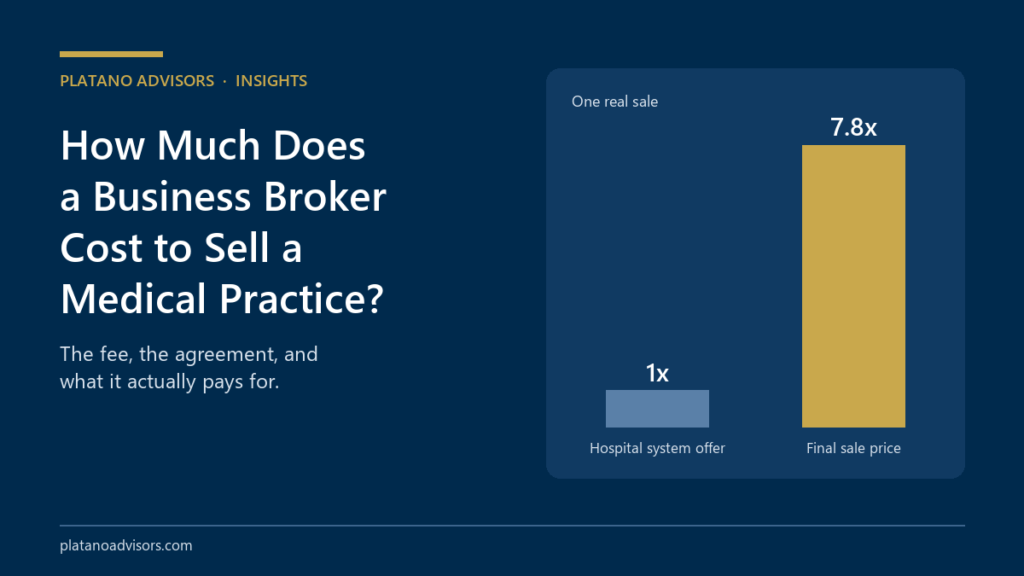
In one case, a medical practice owner came to us with an offer from a hospital system. On the surface it looked like a clean exit with a known buyer.
We did the valuation and the prep work first. We figured out what the practice was really worth, prepared it for sale, and took it to market.
The practice sold for 7.8 times the hospital system’s offer.
The hospital system was not acting in bad faith. Its offer was simply what a buyer offers when no one else is bidding and the seller has not shown what the business is worth. Our fee was a small fraction of the difference.
What Is the Biggest Mistake Medical Practice Owners Make?
Hiring a Broker Who Is Too Cheap
Many people assume the biggest mistake is hiring a broker who is too cheap. That is a real risk. A low fee can mean the broker does not understand the healthcare market, or does not have the reach and process to bring in enough buyers.
Hiring a Real Estate Broker to Sell a Business
It is also worth knowing who you are hiring. In many states, business brokers are real estate brokers. In Florida, for example, business brokerage falls under real estate licensing, and real estate commissions work very differently from business sale fees. Five Risks of Selling a Medical Practice in Florida covers what to check.
Selling a house or a building is a different skill set from selling an operating business. Pricing a medical practice depends on its financial statements, its payer mix, the providers, and how the business runs. Square footage and comps have very little to do with it.
Going to Market Without Preparing the Practice
The biggest mistake I see medical practice owners make is going to market without preparing the business for sale.
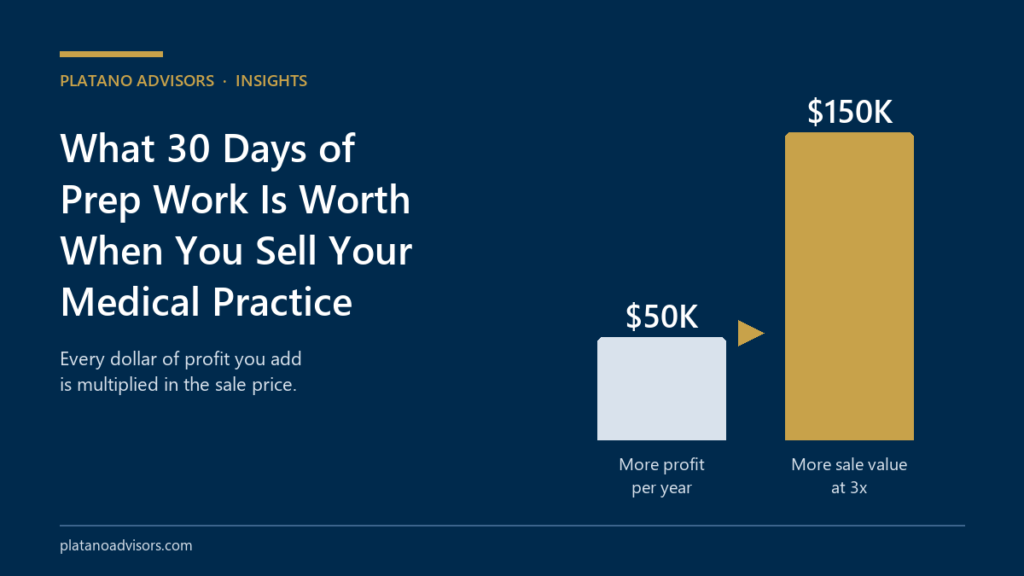
Messy financials, add-backs no one has documented, and questions with no answers all give buyers room to lower their offers. That can easily cost hundreds of thousands of dollars, far more than the difference between any two broker fees. Our guide on how to get your medical practice ready to sell lays out the checklist, and What 30 Days of Prep Work Is Worth When You Sell Your Medical Practice shows what it can be worth.
When Might You Not Need a Broker?
Very large organizations have the in-house expertise, for example a corporate development team that already works with investment bankers. In that case, a separate broker may not add much.
For almost every other medical practice, clinic or physician group, a good advisor is well worth the fee. Getting the most value out of a business is one of the hardest parts of selling it, and it is very hard to do alone while you are still running a practice.
Three Questions to Ask Any Broker on the First Call
- How many buyers do you typically bring to the table, and how many offers do your clients usually receive? Competition sets the price, so ask about the process, not just the percentage.
- What does your engagement agreement say about the term, exclusivity, and how I can get out if it is not working?
- What would you prepare before taking my practice to market, and what would you fix first? A broker who only wants to list the practice and wait for calls is telling you something.
How Should You Think About Broker Cost?
A broker’s percentage is easy to compare and easy to fixate on. What matters more is how much you actually take home: the price, the terms, the structure, and whether the deal closes. Judge the fee against that.
If you are weighing whether to sell your medical practice, start with where it stands today and what it would take to get it ready.
Frequently Asked Questions About Medical Practice Broker Fees
How much does a business broker charge to sell a medical practice?
Most brokers charge a success fee paid at closing. For businesses under $5 million in enterprise value, the market rate is usually 8% to 12% of the transaction value. Larger deals often use a Lehman-style structure, where the percentage steps down as the price passes set thresholds.
Do I pay a broker if my practice does not sell?
With a success-fee-only engagement, the success fee is due only when the practice sells. Separate services, such as a valuation or a prep program before the sale, are usually paid on their own terms. Read the agreement so you know which fees apply when.
How long does a business broker agreement usually last?
Most engagement agreements run at least 12 months, because a business usually takes 6 to 12 months to sell. Before you sign, check the exclusivity terms and how you can get out of the agreement if the process is not working.
Is a real estate broker the same as a business broker?
Not in practice. In many states, including Florida, business brokers hold real estate licenses, but selling an operating medical practice is a different skill set from selling a building. Pricing a practice depends on its financial statements, payer mix, providers and operations.
Is a medical practice broker worth the fee?
For most medical practice owners, yes. A good advisor brings many buyers to the table, produces competing offers and negotiates the terms. In one case, a practice we prepared and took to market sold for 7.8 times an offer the owner had received from a hospital system.
Keep Reading
- How to Get Your Medical Practice Ready to Sell
- What Actually Happens After Your Practice Goes on the Market
- What You Actually Keep When You Sell Your Medical Practice
- How to Sell a Medical Practice: The Complete Guide
- Platano Advisors home
Talk With Us About Your Practice
If you are comparing brokers or weighing an offer you already have, schedule your free discovery call and we will walk you through what the process would look like for your practice.
This article is for general information only and is not financial, legal, or tax advice. Every transaction is different, and past results do not guarantee future outcomes. Talk with your own advisors before making decisions about selling your practice.