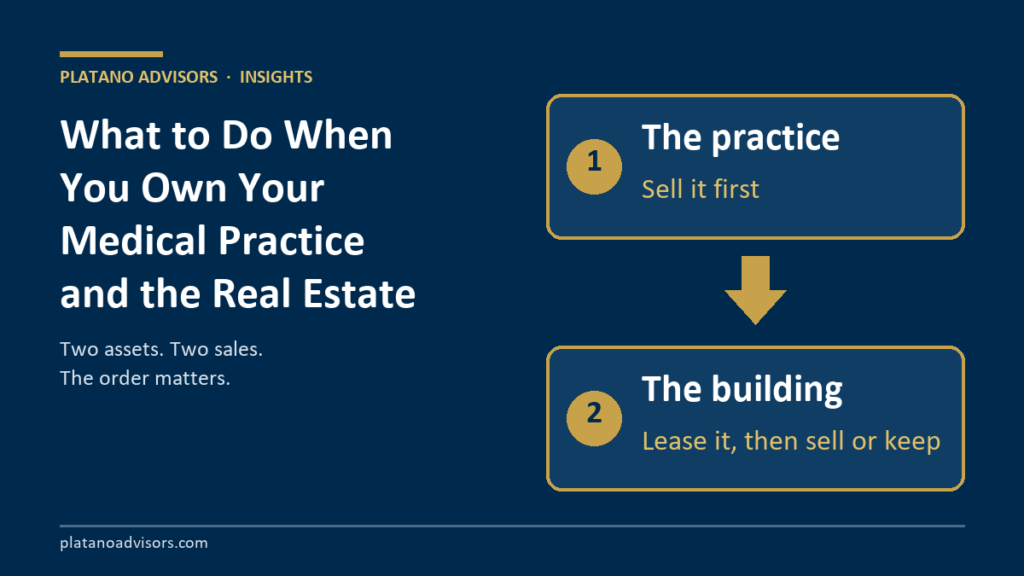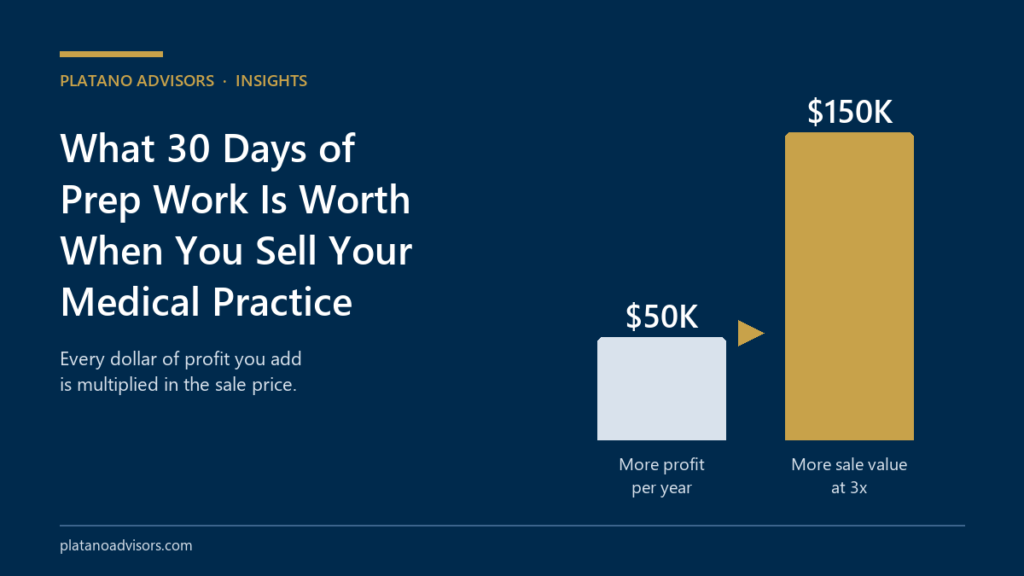
Prep work before selling a medical practice is a 30-day review of the practice the way a buyer will see it, followed by fixing what is costing the owner money or putting the sale at risk. At Platano Advisors we do it before we take a practice to market, and it is not an expensive exercise. In one practice it found a billing fee that, once fixed, added about $150,000 to the sale price.
Key takeaways
- Practices sell for a multiple of earnings, so every recurring dollar of profit you add before a sale is paid to you again at closing.
- A billing fee of 9.5% against a 3% to 5% market rate added about $50,000 a year in EBITDA and about $150,000 in sale value at 3x.
- Prep work finds two kinds of value: money that goes to the bottom line, and protections that keep a buyer from taking value away in diligence.
- Most of the work uses documents the practice already has, which is why it fits in about 30 days.
Most medical practice owners think about preparing for a sale as cleanup. Organize the files, get the tax returns together, make the practice look presentable. That part matters, but it is not where the real value is. The real value is in what you find while you are doing it.
When we run prep work on a practice, we spend about 30 days going through it the way a buyer would: the books, the vendors, the contracts, the staff agreements, the billing. And almost every time, we find money the medical practice owner did not know they were leaving on the table.
Why is a dollar of profit worth more than a dollar when you sell?
Before getting into examples, it helps to understand one thing about how practices are priced.
A buyer does not pay you for last year’s profit. They pay you a multiple of it. So when you add a dollar of recurring profit to the practice before a sale, you do not just keep that dollar every year you still own it. You also get paid for it again, several times over, at closing. We explain how buyers set that multiple in Two Numbers Decide What Your Practice Sells For.
That works in both directions. A dollar of profit a buyer refuses to count costs you that same multiple. This is why prep work tends to pay for itself many times over: it is one of the few places where small fixes get multiplied.
What happened when we found a 9.5% billing fee?
Here is a real one from one of our practices.
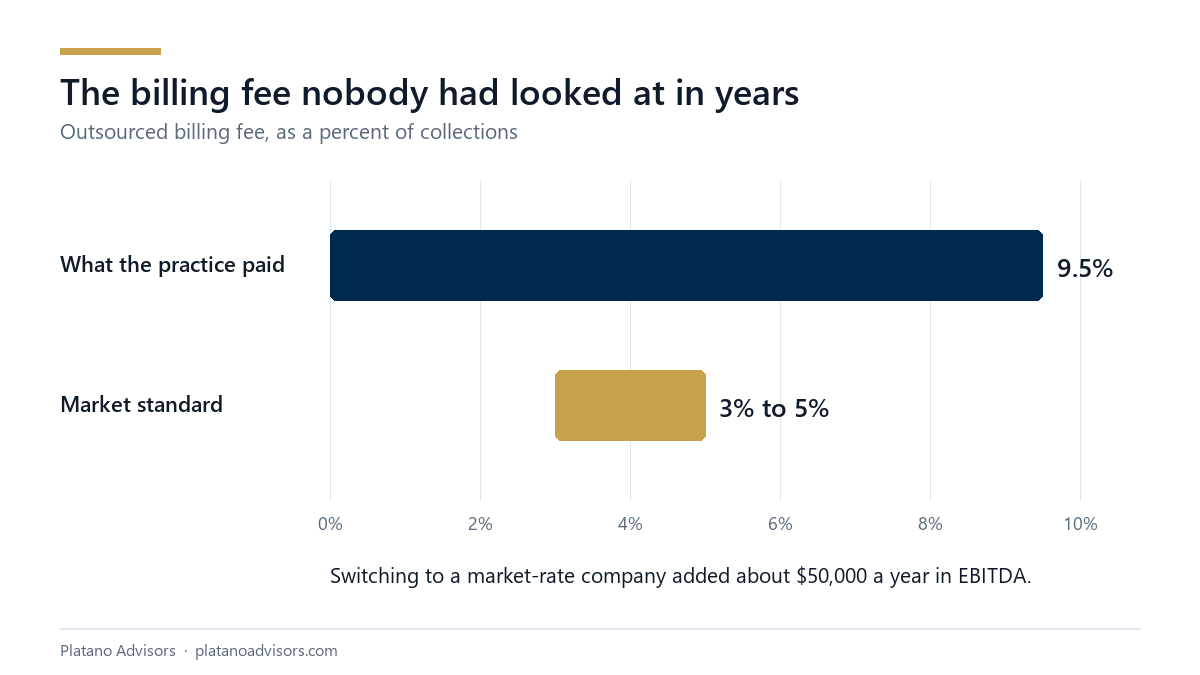
During prep work we looked at what the practice was paying its outsourced billing company. The fee was close to 9.5% of collections. For a practice like this one, the market rate for that same service is somewhere between 3% and 5%.
Nobody had looked at it in years. The billing company was doing the work, the claims were going out, and the owner had no reason to question the invoice.
The practice made the switch. That change alone added roughly $50,000 a year in EBITDA.
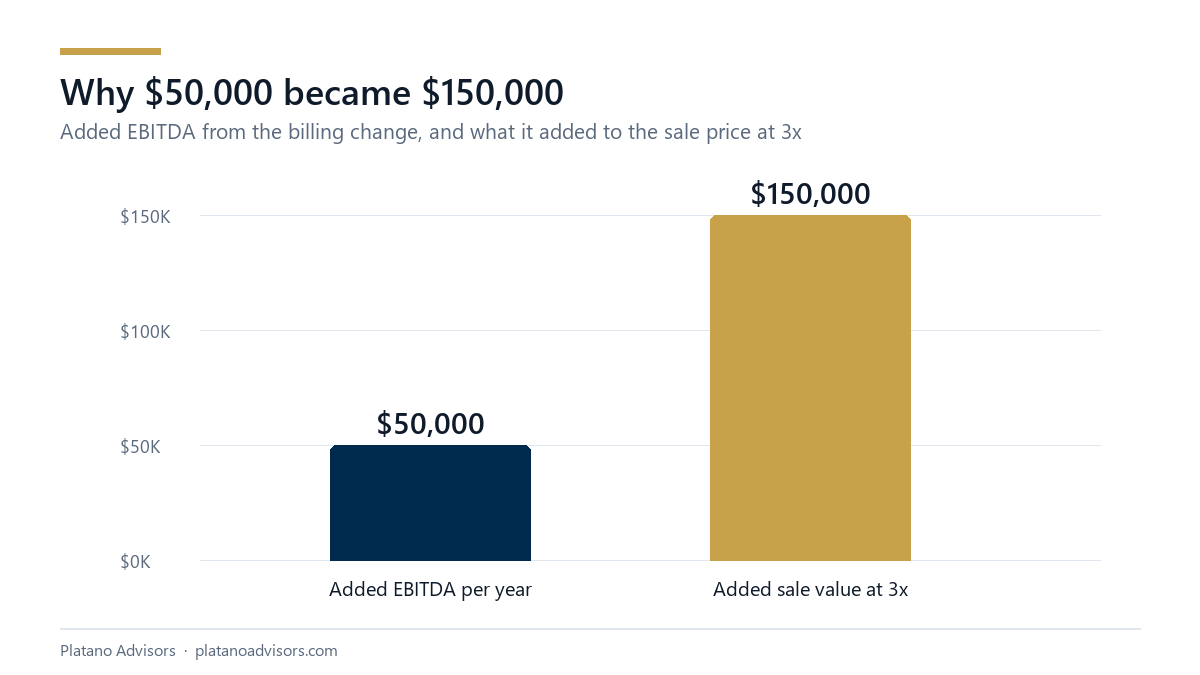
But the point is not the $50,000. The practice sold at roughly three times EBITDA, so that $50,000 became about $150,000 in additional sale value. On top of that, the owner kept the extra $50,000 a year for every year they ran the practice before closing.
What did it take? A review of the billing contract and a few phone calls.
Where else does prep work find value in a medical practice?
The billing fee is just one avenue. In practice, the value we find falls into two groups: money that goes straight to your bottom line, and protections that keep a buyer from taking value away from you later.
Money that goes to the bottom line
Vendor and service contracts. Billing is the most common, but it is not the only one. Answering services, IT support, EHR subscriptions, medical waste, supply contracts, copier and phone leases. Many of these were signed when the practice opened and have been auto-renewing at rates that went up every year. Each one is small. Added together and multiplied, they are not.
Payer fee schedules. Many practices have not asked a commercial payer for a rate increase in years, or have never compared what they are being paid against what their contracts actually say. Sometimes the practice is being underpaid against its own contract. A renegotiation can take longer than 30 days to land, but identifying the opportunity and starting the conversation is part of the prep work, and a buyer will value a documented rate increase that is already in motion.
Add-backs you did not know you had. Most medical practice owners run some expenses through the practice that a new owner would not carry: a vehicle, a family member on payroll, a one-time legal bill, a piece of equipment bought outright. Each of those, when documented properly, is added back to your earnings. Each one that is not documented gets thrown out by the buyer. We go line by line so that every legitimate add-back has the support behind it before a buyer ever sees the number. We covered how buyers test these in How to Get Your Medical Practice Ready to Sell, and the bookkeeping side in Clean Your Books.
Owner compensation set correctly. If you pay yourself well above or well below what a buyer would pay a physician to do your job, the earnings a buyer sees are distorted. Setting your compensation at a fair market level in the numbers, and explaining it, makes sure the buyer is pricing the practice and not your personal pay decisions.
Protections that keep value from walking out the door
Non-solicit and non-compete agreements with staff. This one is very inexpensive and it is one of the first things a buyer asks about. If a provider or a front desk lead can leave after the sale, take patients with them, or recruit the rest of the team to a competitor, the buyer is taking on a risk they will price in. Putting written agreements in place with your providers and key staff, with non-solicitation of patients and employees, and non-competes where appropriate, reduces problems long before a sale and makes the practice a lot more sellable when the time comes.
Employment agreements for the people who generate revenue. Handshake arrangements with associate physicians, nurse practitioners, or physician assistants worry buyers. A written agreement tells the buyer that the revenue those providers produce is staying with the practice.
The lease. A financed buyer needs a lease that runs at least as long as their loan, and an assignment clause that lets it transfer. Fixing that with your landlord before a sale is a routine conversation. Fixing it in the middle of a sale, when the landlord knows the deal depends on their signature, is a very different one.
Compliance items that are easy to fix now. An expired license, a missing business associate agreement, a HIPAA policy that was never written down. None of these are expensive to fix. All of them make a buyer wonder what else they have not found yet, and that doubt shows up in the price or the terms.
How much can prep work add to the sale price?
An illustration, with made-up numbers for a practice that sells at three times EBITDA:
| What prep work found | Added to EBITDA each year | Added to sale value at 3x |
|---|---|---|
| Billing fee brought to market rate | $50,000 | $150,000 |
| Two auto-renewing vendor contracts rebid | $12,000 | $36,000 |
| Add-backs documented that would have been rejected | $25,000 | $75,000 |
| Total | $87,000 | $261,000 |
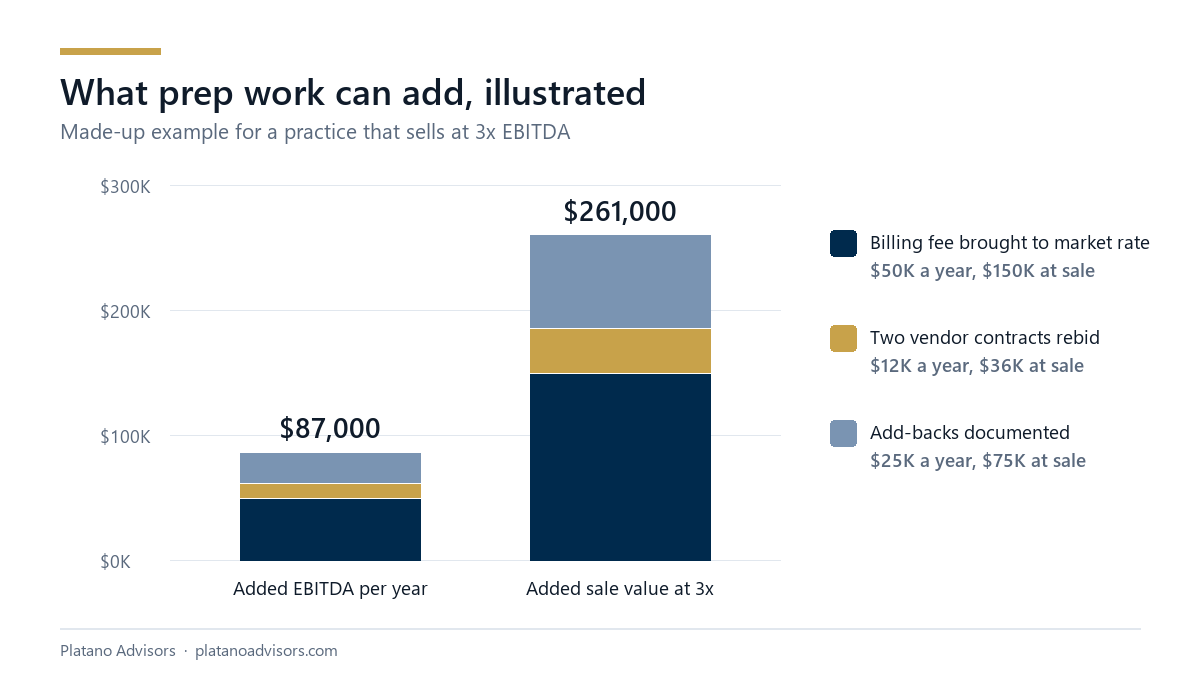
The protections do not show up as a line in that table, but they matter just as much. They are what keeps a buyer from cutting the price in diligence, moving part of your payment into an earnout, or walking away from the deal.
Why does prep work only take 30 days?
There is no reason prep work has to drag on for months. Most of what we look at already exists: your P&Ls, your contracts, your billing reports, your staff files. The work is in reviewing it the way a buyer will, finding what is costing you money or putting the sale at risk, and fixing what can be fixed before you go to market.
At the end, you have a practice that earns more, a set of numbers a buyer can verify, and fewer surprises waiting in diligence. And if some of the fixes take longer to finish, you know exactly what they are and what they are worth. You can see how we approach it on our prepare your medical practice for sale page.
If you are thinking about selling in the next year or two, prep work is the cheapest money you will make in the process. When you are ready to sell your medical practice, the work done here is what a buyer pays for.
Frequently asked questions
What is prep work for selling a medical practice?
It is a review of your practice the way a buyer will see it: financials, vendor contracts, billing, staff agreements, lease, and compliance. The goal is to find value you can add and risks you can remove before going to market.
How long does prep work take?
About 30 days for the review and the fixes that can be made right away. Some items, like a payer rate negotiation, may take longer to finish, but they are identified and started during that window.
Why does a small increase in profit matter so much?
Practices are priced as a multiple of earnings. A recurring increase in profit is multiplied in the sale price, so a $50,000 improvement at three times EBITDA adds about $150,000 in value.
Do I need non-compete and non-solicit agreements before I sell?
Buyers will ask whether your providers and key staff can leave and take patients or employees with them. Written agreements are inexpensive to put in place and reduce that risk, which makes the practice easier to sell.
When should I start prep work?
Ideally a year or more before you plan to sell, so you get the benefit of the extra profit while you still own the practice and the buyer sees a full year of the improved numbers.
Keep reading
- How to Get Your Medical Practice Ready to Sell
- Clean Your Books: It’s Worth Millions When Selling Your Medical Practice
- Two Numbers Decide What Your Practice Sells For
- How to Sell a Medical Practice: The Complete Guide
- Platano Advisors home
Talk with us about your practice
Book a call and we will walk you through what prep work would look like for your practice.